Trends from AdWeekNY, the World's Most Boring Race and the Invention of a New Apple
What’s In This Issue?
 Story 014 Trends From Advertising Week In New York
 Story 02The World's Most Boring Race May Be Onto Something
 Story 03The Invention of the Sunpunch and a Fascinating Future for Apples
 Story 04Paydaze
 Story 05Why We Talk Funny
Even More Stories
- Nobody Redesigned the Allen Key for 115 Years. Here’s the Fix.
- Wallpaper Magazine Aims To Create a Signature Look by Making their Latest Cover Immune to Screenshots
- Chatbots Keep Telling Stories About Lighthouse Keeper 'Elias Thorne'. We Might Know Why [Paywall]
- Korea's Birth Rate Is Going Up For The First Time In A Generation
- Seattle becomes first city to ban surveillance pricing
- The Great Solar Repowering
- CD sales are making an unexpected comeback amid a retro tech boom
Media Recommendation
 Stylus
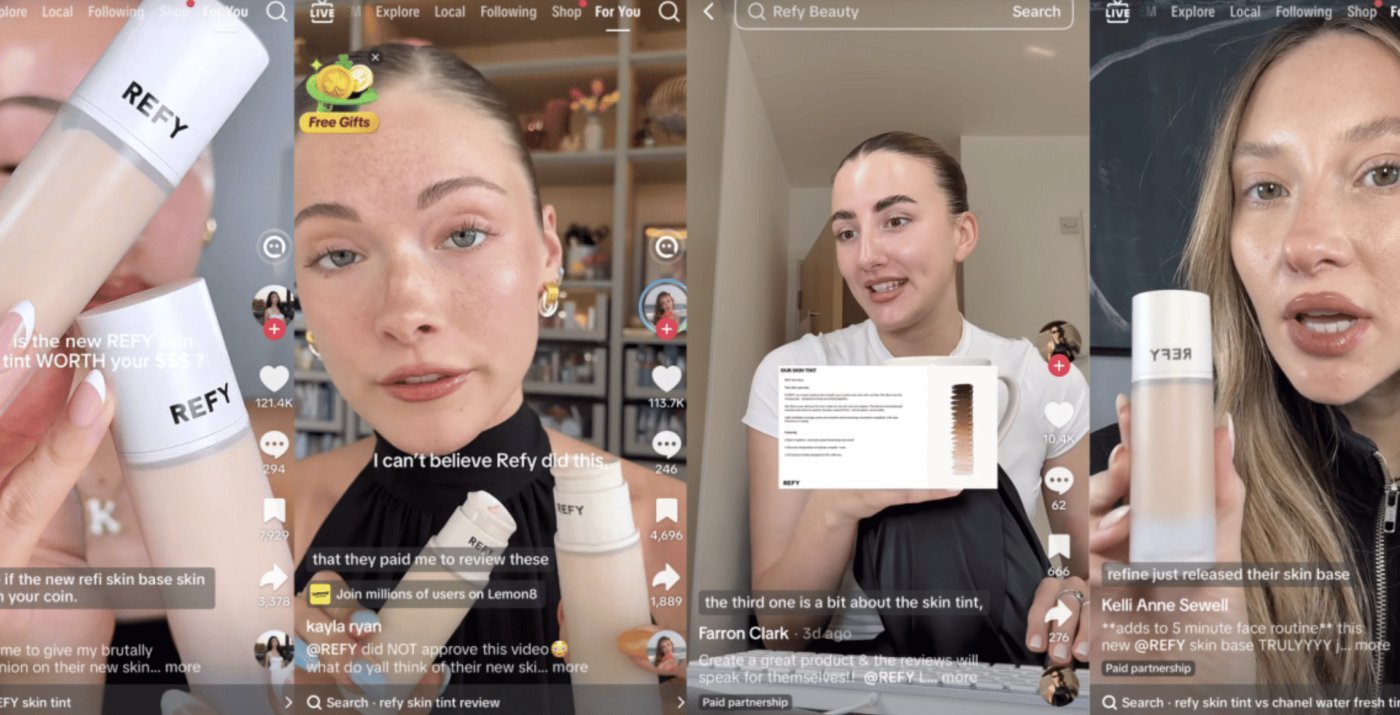
4 Trends From Advertising Week In New York
I spent the first half of this week in New York for Advertising Week where the latest in ad tech, media buying and creator tech was on full display. Among the side conversations and stage panels, a few themes stood out for me and are worth thinking about, whether you work in the marketing space or just have a curiosity about the evolution of media and consumer behavior.
The World's Most Boring Race May Be Onto Something
By many accounts, the HYROX race is exploding in growth as the world's fastest growing fitness race. For the past annual season, nearly 1.5 million people will take part in at least one of their races across the globe. Unlike many other races, the secret to HYROX's success may be in its boring consistency. Every HYROX race runs through the same eight stations starting with a 1,000-meter run, a 1,000-meter ski erg, a 50-meter sled push, a 50-meter sled pull, 80 meters of burpee broad jumps, a 1,000-meter row, a 200-meter farmers carry, 100 meters of sandbag lunges and a closing set of 100 wall balls (watch the race).
Hyrox's expansion rests on a single design decision: because the eight runs, eight stations and their order never change, the sport works as one continuous global ranking system rather than a scattering of unconnected local events. A time is a time, wherever it was posted. That is harder to pull off than it sounds. Road races are shaped by elevation, surface and weather. Obstacle events rebuild their obstacles around whatever terrain a venue offers. Other fitness competitions vary their programming on purpose, so athletes cannot prepare for the exact test. Fixing the format in place gives Hyrox results that mean the same thing on every continent. The effect on behavior is straightforward. Competitors treat a finish time the way a runner treats a marathon personal best — a number to beat at the next event — which turns a single entry into a repeat habit across a season.
The success of the race comes not only in its ability to allow anyone with a relatively good level of fitness to participate without months of training, but also in its attraction for people to compete over and over, in order to set a personal best time.
One of the consistent challenges in any industry is finding a way to encourage repeat customer loyalty. Despite the temptation to try and always customize or create a unique variety of experiences, sometimes the best option can also be the most boring. That's a non-obvious winning formula worth considering.
The Invention of the Sunpunch and a Fascinating Future for Apples
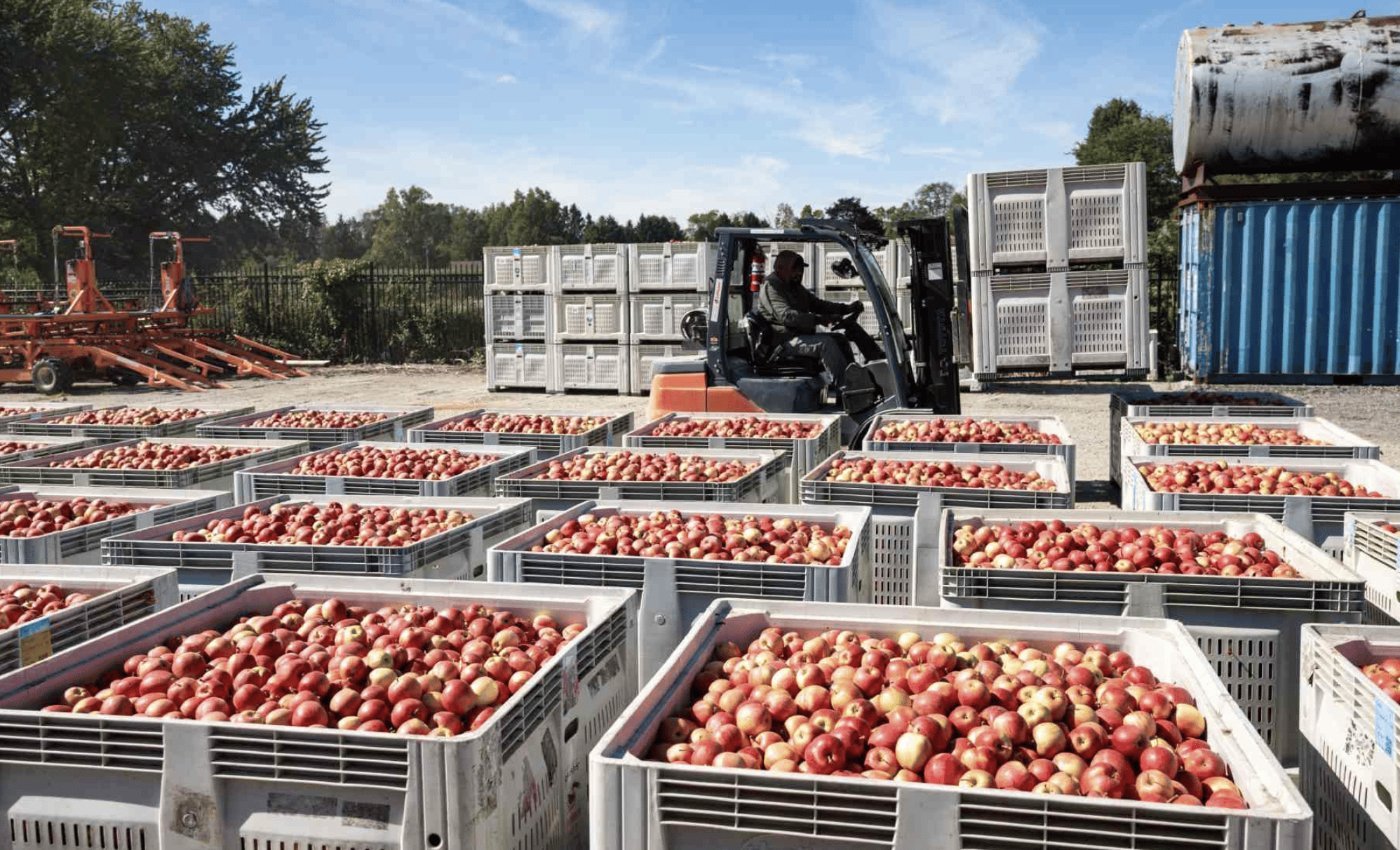
There's an apple variety coming to a grocery store near you called Sunpunch that has been twenty-five years in the making. Apples are among the most durable of all fruit, with a stability far beyond almost any other fruit. It's no wonder it's the most valuable fruit crop in Canada, according to the Walrus, and the testing ground for some long- term research that may also shape the way we grow, store and consume food in the future too.
In Virginia where I live, the average farmer's market stall has no less than ten varieties of apples. Contrast this with the well-known story of banana homogenization and you can see two parallel histories. Varieties of apples have survived and thrived, while new varietals are being introduced every year. In the world of apples, innovation and creativity are working overtime. The banana has become the global symbol of the dangers of monoculture and in many cases, is now criticized among banana afficionados as mostly tasteless.
The bigger story about apples is that all the experimentation may be leading to other innovations too. By measuring evolving climate data and working to produce a variety that can sit on a desk for four months without losing flavor or going bad, Canadian apple scientists are learning things that could be applied to the global food industry as well. This is the sort of story I love to share. One invention, creativity from an unexpected place and a lesson that the rest of us can use.
Paydaze
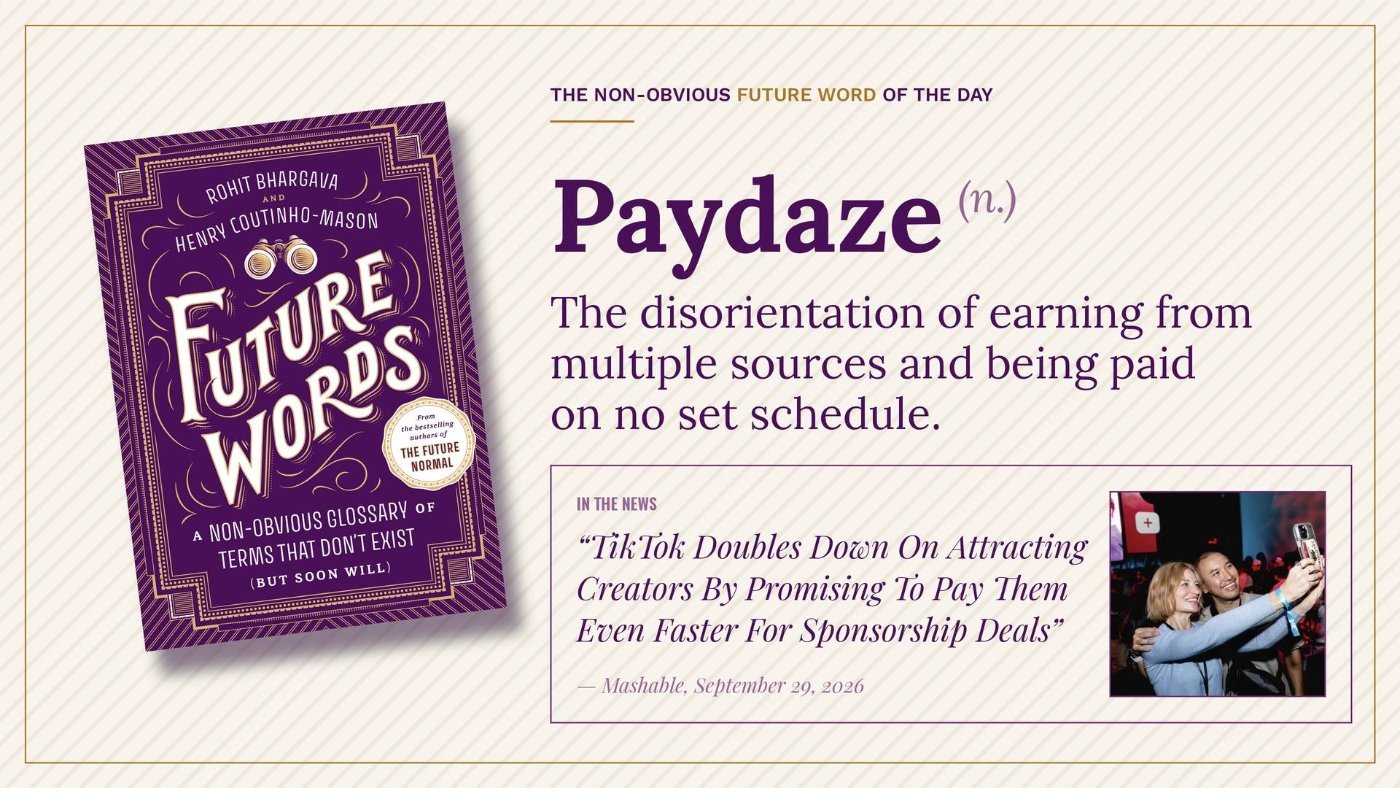
As the creator economy continues to grow, there is an all-out war between platforms to attract creators to make more content that will drive more sponsorship dollars. TikTok made the latest move in that battle at their recent Creator's Summit by promising to pay creators even faster (within 30 days) and a host of other financial incentives to answer the question on every creator's mind: how can they more effectively run their businesses?
In Future Words, one of the trends we wanted to spotlight was this ongoing shift from the regularity of a bi-weekly paycheck to the much more uncertain payment schedule of freelancing. We called this the "paydaze" where irregular payment schedules become a normal part of life. While some freelancers do have recurring clients or retainer models, the majority are dealing with this - which also presents an opportunity for anyone to come up with smart ways to address this.
Want to attract a freelancer to give you a better rate or prioritize your work? Offer to pay them upfront or with a regular cadence instead of the usual half upfront and half on completion. The choice to avoid the paydaze can be a negotiating tactic or a way to build a human connection with someone by truly understanding what motivates them. At the end of the day, if your flexibility allows someone to make their rent that month, they are unlikely to forget it.
Why We Talk Funny
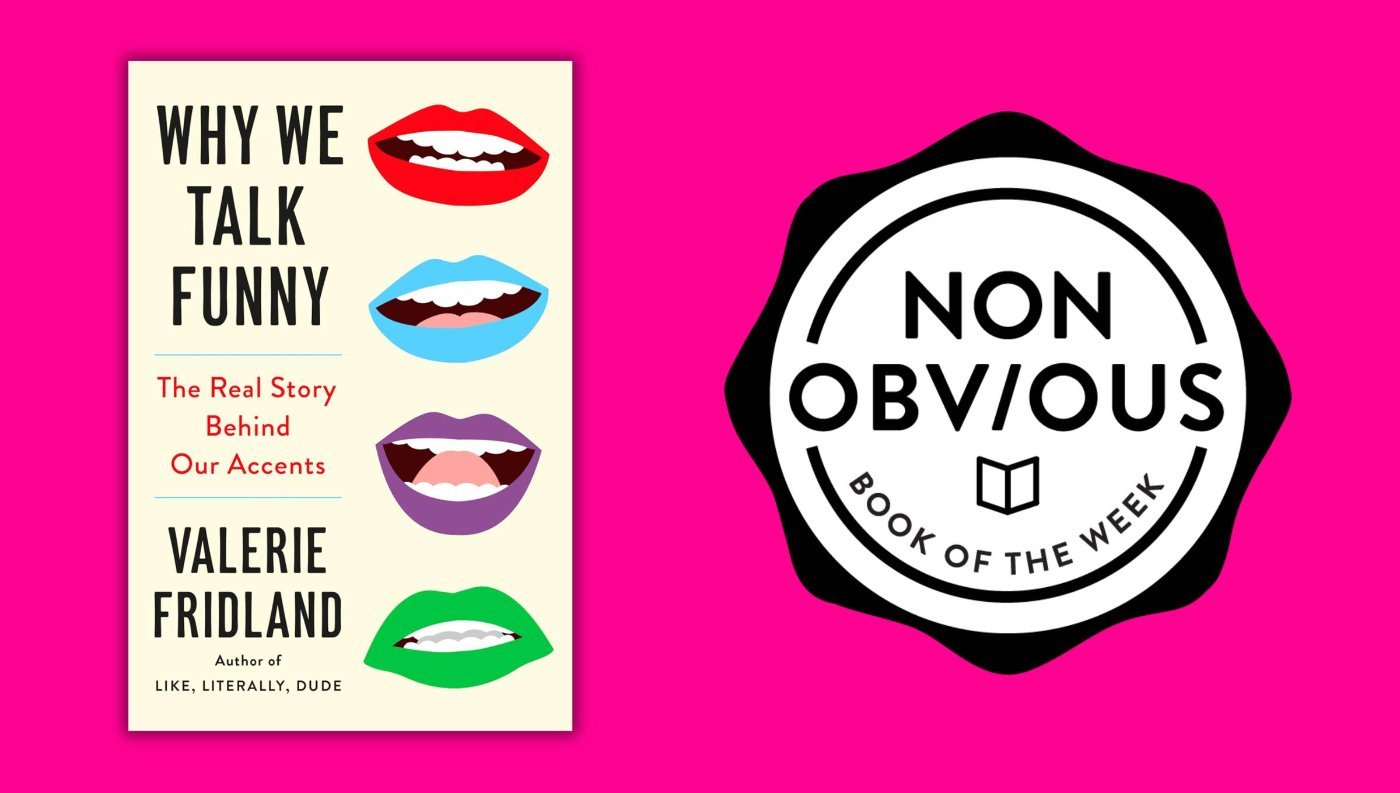
We all have an accent, and it shapes the way that we communicate with others and the way we are understood. In this book from linguist Valerie Fridland, you'll get a deep dive into the evolution of speech and some fascinating questions like why the words for mother and father are so similar across the world. From baby talk to the differences among races and ethnic groups all speaking the same language, the book is a unique look at something that sometimes doesn't get enough attention except from those who are actively trying to eliminate it.
Far from accents being a source of embarrassment or something to unlearn, Fridland explores the unique story they tell about human history and where we all come from. Why We Talk Funny is a book for any human who has ever wondered about accents and wanted to make the connection between the way we pronounce things and the cultural history we bring to it through our own voices. For those reasons, it's my pick for the Non-Obvious Book of the Week.
The Non-Obvious Media Recommendation of the Week: Stylus
Non-Obvious Thinkers have a broad media diet. Every week I share a new website, magazine, newsletter, podcast, TV show, movie or other media source that can inspire you to see what others miss. Here is a summary of this week's pick:
"Stylus is the trends intelligence partner for forward-looking brands and agencies. We identify and articulate consumer futures to help the biggest brands and agencies in the world build better futures – for their businesses, for people and for the planet."
SEE RESEARCH SAMPLES + SUMMARIES >> https://stylus.com/resources
