The Loneliness Industry and The World's Saddest Product
What’s In This Issue?
The "Holographic Wife" May Be The World's Saddest Product
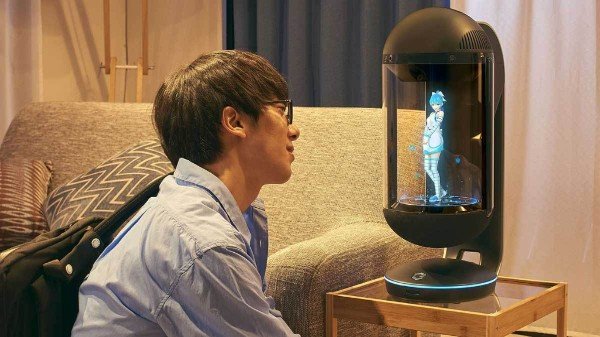
About a year and a half ago, a Japanese company called Gatebox released a depressing preview video of a new AI powered "Holographic Wife" that would offer lonely young Japanese salarymen companionship at home. The character is based on anime and stand about 8 inches tall inside a glass box. This week the company finally released their actual product with a slightly less depressing video - so now the "holographic wife" is available for sale for about $1300 USD plus a monthly subscription fee.
There have been many recent articles about the prevailing loneliness of many Japanese (often known as Hikikomori, a group I wrote about in Non-Obvious 2017) and the new industry helping to clean up after the many people who die alone. As technology starts to go beyond utility and offer things like companionship, our relationship with this tech will continue to evolve. This idea of "holographic wives" may be just the beginning of an entire industry that is increasingly focused on helping people of all ages and genders to deal with the crippling reality of loneliness.
Why Facebook Rating Your Trustworthiness Is Good News
The Washington Post story this week revealing the "previously unreported ratings system" used by Facebook to rate the trustworthiness of users on a scale of zero to 1 has all the usual components of an outrage-worthy announcement. How dare Facebook think they can rate all of us? What if they abuse this system or someone hacks it? And doesn't this just get us one step closer to the scary imagined world of Nosedive? Perhaps it's a good time to take a step back and curb our outrage.
The problem of fake accounts and fake stories has been a plague on Facebook. It causes people to believe lies and manipulates their view of the world. Many of us are duped into sharing stories that seem true without checking to see if they are. Yet if you knew your trustworthiness "score" would decrease if you shared an unverified link, you might dig a little deeper before impulsively clicking the share button.
The irony, of course, is that Facebook can't really tell us how the algorithm works because if they do then someone will figure out a way to hack it. So in order for the system to work, we have to put our blind faith in Facebook to have our best intentions in mind. That is a leap that is getting harder and harder to make.
Someone Noticed All Our Instagram Photos All Look The Same

If you have ever had that feeling that you're seeing the same images over and over on social media, someone actually took the time to compile all those images into a fascinating Instagram account called @insta_repeat. Scrolling through the curated images, one of the things you'll quickly realize is just how much sameness there is in experiences that otherwise might have seemed unique. The entire project offers a perfect commentary on how sterile our experiences sometimes can become when reduced to a single image. Especially when we all use the same handful of filters to magically touch up those photos.
