Singapore Pays Citizens To Read, Why We Finally Saved the Whales and How To Deal with Obtuse Leaders
What’s In This Issue?
 Story 01Singapore Pays People To Put Down Their Phones and Just Read
 Story 02Why We Finally Did Save the Whales
 Story 03The Art of Being Obtuse (Like Mark Zuckerburg)
 Story 04Veritax
 Story 05Situated
Even More Stories
- Brain-Stimulating Contact Lenses Match Prozac in Depression Study
- How Wikipedia Can Survive the Age of AI with Jimmy Wales
- Dangote launches Africa’s largest ever IPO
- Studio Ghibli’s Deepest Secret Is What Comes Next
- What if social media isn’t hurting kids?
- An Ingredient That’s All Too Rare in Adult Life
- Amazon Has Become Pathetically Reliant on Food Stamps to Power Its Empire
Media Recommendation
 Mediagazer
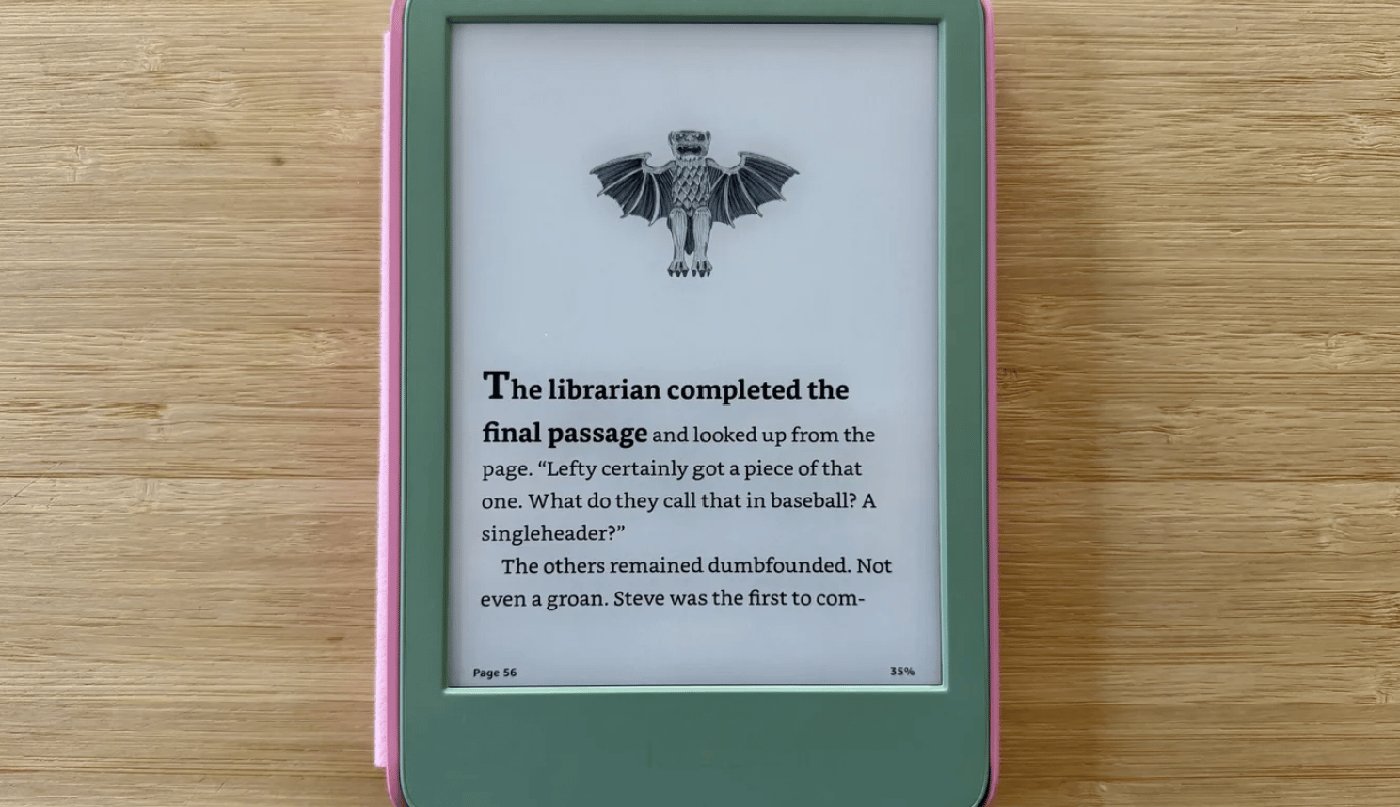
Singapore Pays People To Put Down Their Phones and Just Read
Can paying people to spend 15 minutes a day reading actually improve an entire population's literacy and overall level of intelligence? This is the latest idea from the Singapore government aimed at trying to help people of all ages have a small financial incentive to read more.
"The country has launched a new initiative designed to turn reading into a daily habit. Spend at least 15 minutes reading, record the session through the government’s platform, and you’ll receive 20 virtual coins. Collect 1,000 of them, and you can exchange them for S$ 1, or roughly 80 cents in the US. Since only one reading session counts each day, reaching that first dollar takes 50 days. Nobody is getting rich here, obviously. But that’s what makes the idea interesting. The cash functions more like the achievement badge or daily streak you’d find in an app, except this one tries to pull your attention away from the screen."
The gamification of this idea and the behavioral psychology behind it is sound. Despite the relatively small payout, the idea of the streak combined with the growing desire among people of all ages to find more time away from their devices could make this a case study in how to shift a population's reading and media consumption habits through the formation of new habits for reading. As the national library board chief Melissa Tam notes, "we know that habits are built through small, consistent actions. So, we are starting with a simple goal: just read for 15 minutes a day. On the bus, before bed or over lunch."
Of course, it also raises questions about what sort of reading materials are available through the government portal and whether those are locked to certain topics - but it will be interesting to watch whether this small incentive along with gamified rewards are enough to help break the toxic habits of doomscrolling and get people reading again.
Why We Finally Did Save the Whales
40 years ago in the movie Star Trek IV: The Voyage Home, Admiral Kirk and his crew travel back in time to San Francisco in 1986 to try and save humpback whales that are extinct in the future because they hold the key to answering an alien message and saving 24th century Earth from destruction. The movie shined a spotlight on the conservation efforts in progress to save the whales and for a time that became a rallying cry of environmental groups. The movie was credited with fueling a resurgence in humpback whales back from the brink of extinction.
The global shift continued this past week, when Iceland quietly joined hundreds of other nations to ban whale hunting, leaving only Norway and Japan as the last two countries on Earth that allow the practice to continue. The reasons for their change of policy, though, did not come down to the moral argument. Rather, increasing tourism dollars from whale watchers was the real driver, combined with a dwindling demand for Icelandic whale meat. The biggest remaining challenge, as the story illustrates, is the connection between whale hunting and the independent identity of some Icelanders. For students of behavior change, this story has everything. Financial incentives, national identity, geopolitical pressure and an environmental win forty years in the making.
The Art of Being Obtuse (Like Mark Zuckerburg)
Obtuse: To be slow at understanding simple things, or to act like you do not get something that is obvious to everyone else.
That's probably the best word I can think of to assign to Mark Zuckerburg's reaction to any criticism of Meta. When the company is criticized for compromising teenager's mental health, he suggests the problem isn't that bad. When people warn that the Meta glasses are being used by perverts to take images of women, he dismisses the concerns and focuses only on the positive use cases. When the world calls for a slowing of AI advancements to really understand their impact on humanity, he "argues that competition and legal liability already give companies sufficient reason to build their models responsibly."
"Obtuse" describes a fundamental problem with many other leaders of large organizations (or governments) today as well. They see only one small myopic view and are unable or unwilling to understand the broader implications. They focus on the optimistic micro perspective instead of the realistic macro one. Sadly, offering up case studies or examples doesn't seem to help. They just double down on what they already think. So, what would it take for leaders with these limited mindsets to actually understand the implications of what they promote?
In movies, the only thing that ever works is bringing the consequences to their doorstep. Unless they feel for themselves what it's like to have privacy compromised, or the toxic effects of cyberbullying, those scenarios are easy to minimize. Sometimes an evolution of thinking doesn't happen until a wake up call comes first.
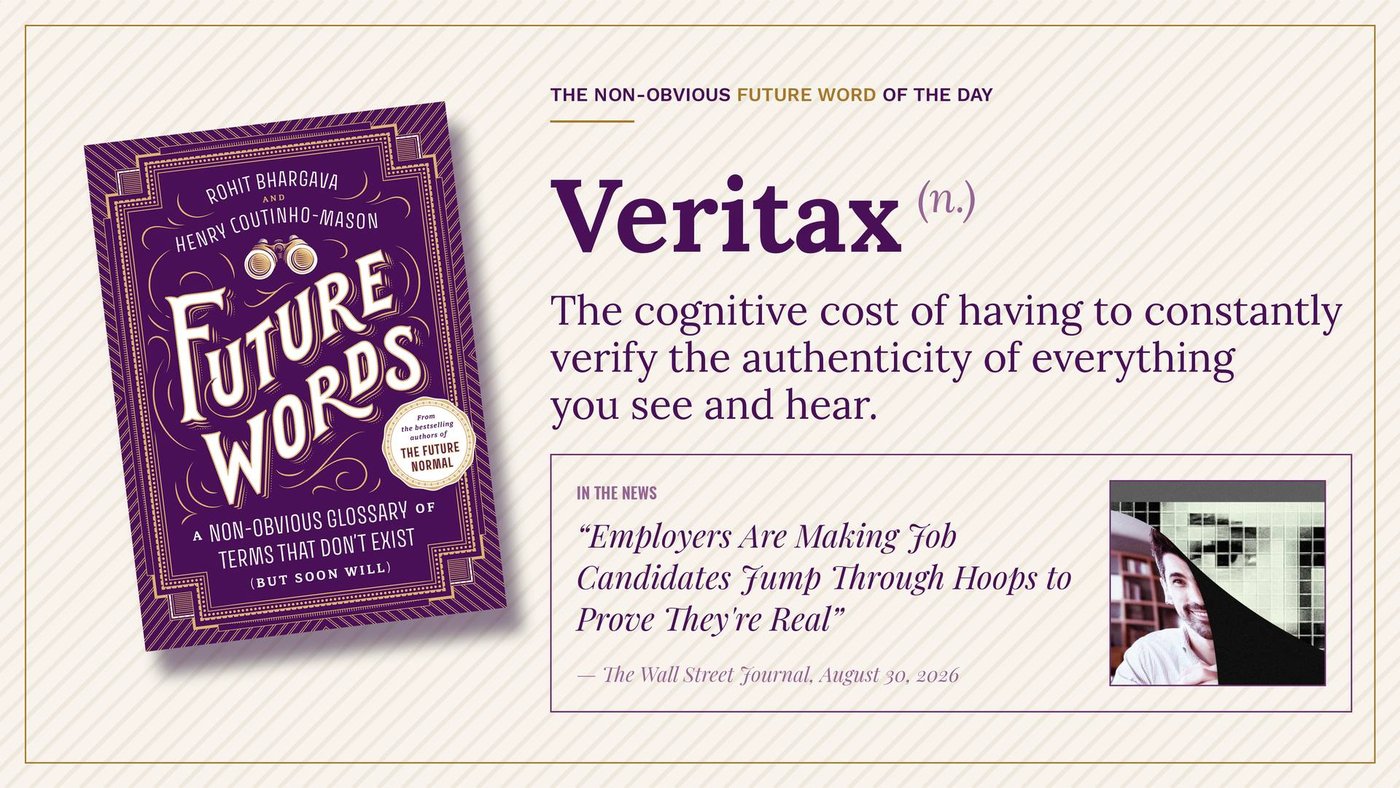
Veritax
Forget the CAPTCHA to verify that you're human, we may soon be heading to a world where you'll need to do something more physical just to prove that you're not an AI. There was a story recently in the WSJ about employers who were requiring candidates to wave their hands on a video interview to prove they are not AI avatars. It has become a two-sided battle where human job applicants try to make sure their resumes are not filtered by AI tools, while employers try to ensure they are not getting duped by people's AI selves taking interviews for them.
This is what we call veritax, the growing social cost for all of us that comes from having to always verify what is real and what may be AI generated right in front of us. The story, and the word, both point to our current future where the premium attached to real life interactions between actual humans means there will be a growing suite of tools that primarily aim to offer comfort and verification for all of us that we are indeed speaking with a real human.
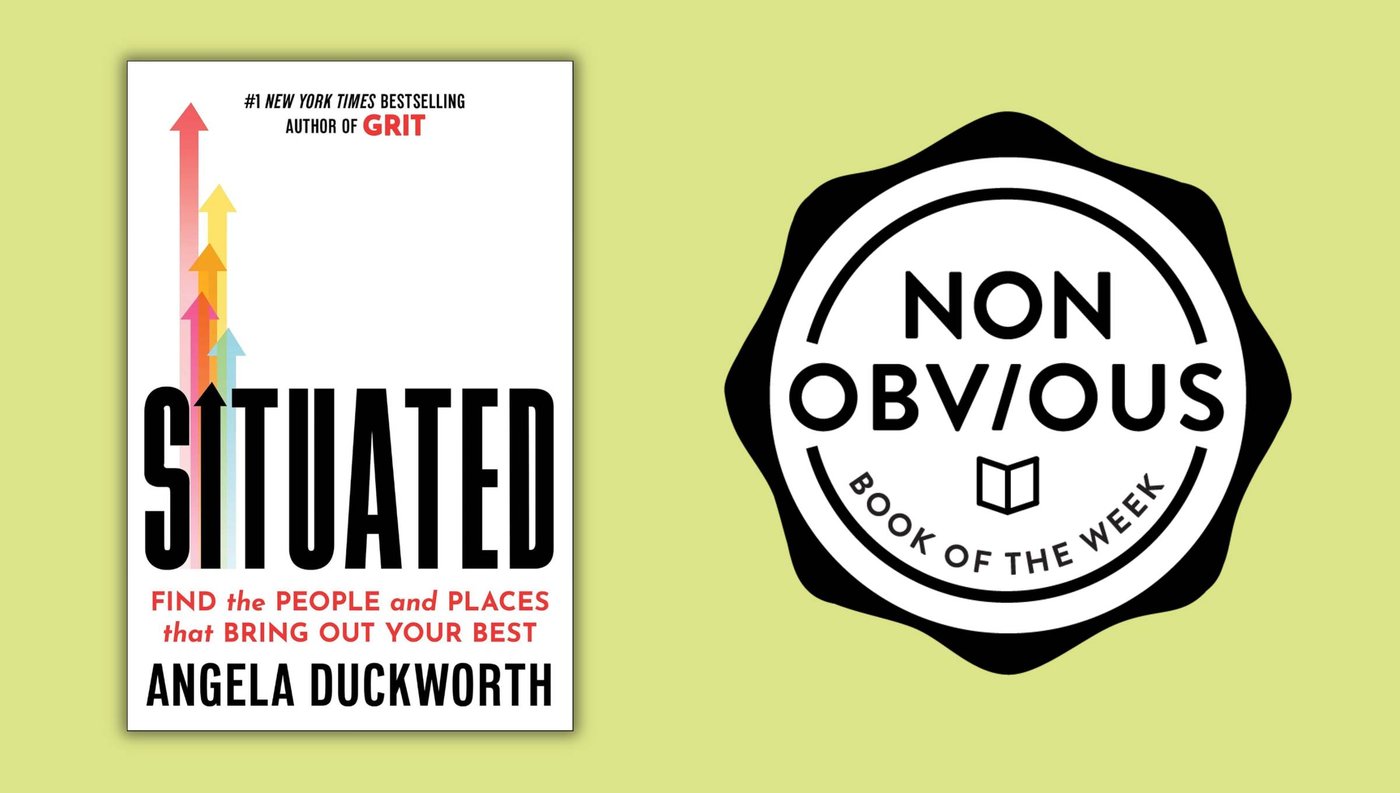
Situated
From the celebrated author of Grit comes the best sort of sequel ... a book that spotlights the flaws in a previous argument and attempts to correct them in a thoughtful way. The premise of Grit was all about mental toughness and what Duckworth described as the intersection between passion and perseverance. The only problem was that that didn't always work if you were stuck in a difficult situation or place that was holding you back. After more research, a new theory emerged:
Though you’re often told to make the best of your situation, it is far, far better to make your situation better first.
Beyond the grit you bring to your situation, being better situated might be the real key to success. For anyone who has ever felt held back by their circumstances or struggled to break free from their environment, this book reminds us just how large an impact the things around us have on our opportunities and success.
In this sense, Situated is the perfect complement to Grit. It fills the gap between those ideas and balances the need for perseverance and passion with a focus on simultaneously doing all you can to improve the people and place around you too.
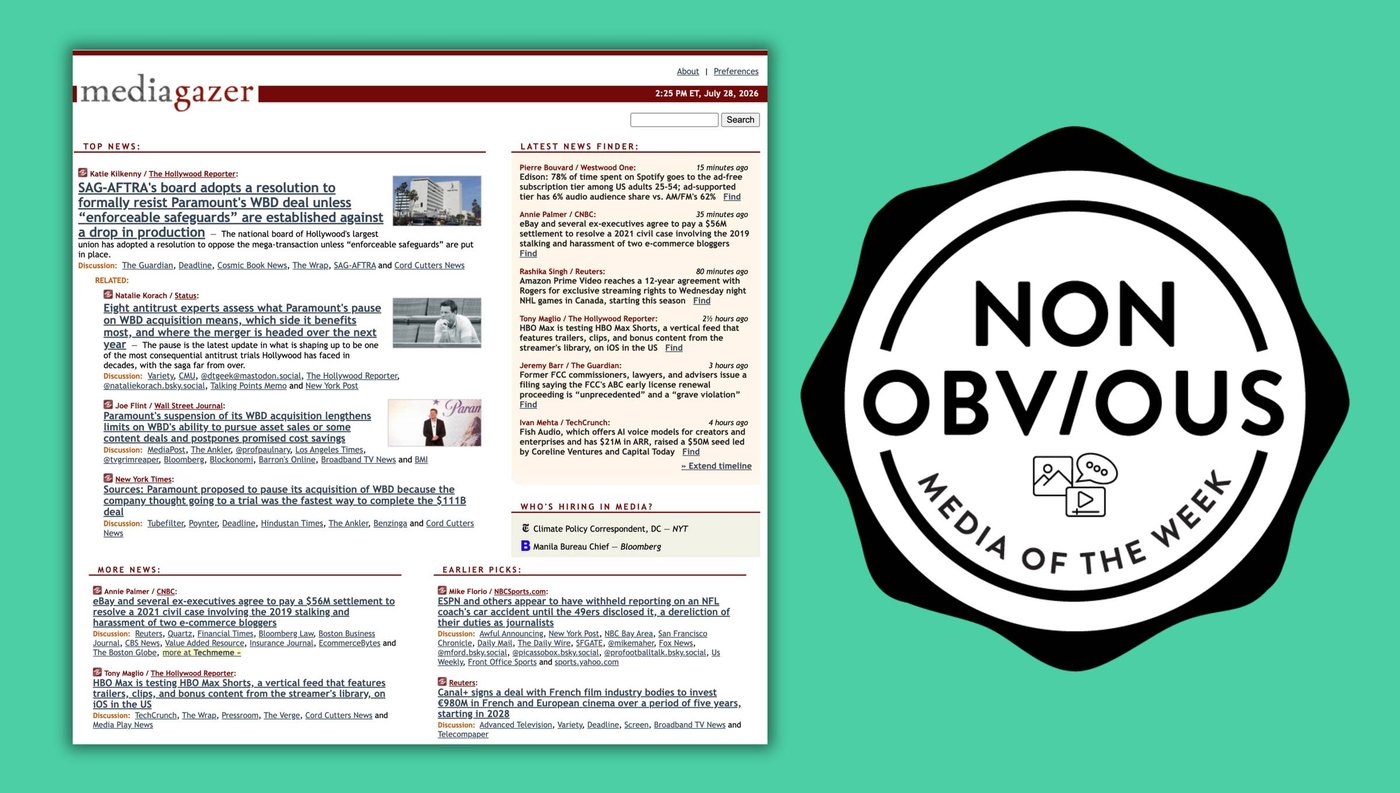
The Non-Obvious Media Recommendation of the Week: Mediagazer
Some of the news sources that I use every week to put together this email for you are aggregators of information and that's a good description for Mediagazer, which "presents the day's must-read media news on a single page." It is a page of links to stories, but sometimes when you're just trying to get a snapshot of the latest big stories in the media industry, this is a perfect recap. This is a good one to add to your list of sources that you can pull information from, particularly if you enjoy list style recaps with the option to click and read more (sort of like the "More Stories" section of this newsletter).
