Genetically Personalized Meals, How To Attack Your Competitors and the Woman Who Can't Forget
What’s In This Issue?
This Week’s Main Stories
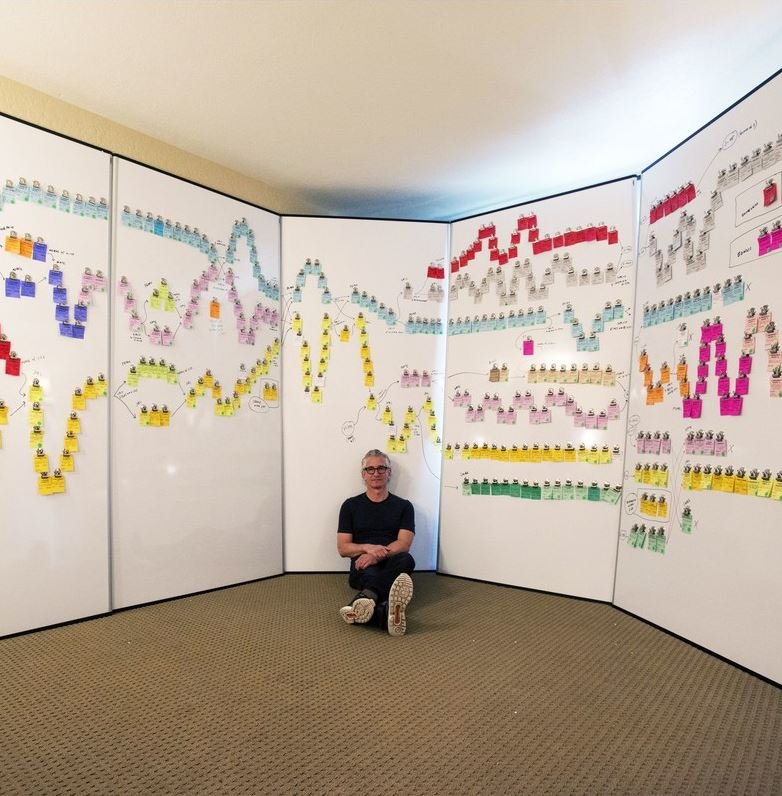 Story 01How Steven Soderbergh Created a Choose-Your-Story TV Series
 Story 02Virgin Money Launches Experience Center Without Banking Facilities
 Story 03How To Authentically Do An Attack Ad
 Story 04Forget Dieting, Now You Can Have a Genetically Personalized Meal
 Story 05The Woman Who Remembers Every Day of Her Life
How Steven Soderbergh Created a Choose-Your-Story TV Series
A new series called Mosaic from filmmaker Steven Soderbergh tells an episodic murder mystery story from multiple angles and gives the audience a choice of whose perspective to follow. In development, Soderbergh decided not to tell his actors whether they were the lead or not ... allowing each of them to believe the story revolved around them. His intent through the secrecy was to create a more authentic final story. The big takeaway for me (aside from the epic photo of his storyboard) was that sometimes in order to achieve a big vision, it might pay off to give the participants only what they need to know and nothing more.
Virgin Money Launches Experience Center Without Banking Facilities
The newest retail locations from Virgin Money in the UK have a bowling alley and games room, a meeting space, and even a theater cinema. In fact, 7 new "Virgin Money Lounges" are filled with everything BUT banking facilities. It is a great example of an organization deciding that the most powerful benefit they can offer to their customers isn't a new way to transact - but rather the sense of belonging and access as a side benefit of being a customer. In a world filled with parity of services, it's a bold statement for how to stand out.
How To Authentically Do An Attack Ad
I happen to believe, like David Ogilvy, that political ads are wildly dishonest and should not be allowed. Attack ads are almost always based on lies and deceit. Samsung's latest spot is different. It pokes fun at dwindling Apple fan boy culture and tells the story of a consumer "growing up" to pick Samsung instead. The beauty of this attack ad was how Samsung goes after their competitor (Apple) without victimizing their customers. If you're going to go on offense and attack your competition, this is how you do it.
Forget Dieting, Now You Can Have a Genetically Personalized Meal
The more you can measure about our bodies and genetics, the more you should be able to tailor the nutrients and experience of eating to be healthier. Along with the vending machine that can deny you unhealthy snacks, this story illustrates that the makers and sellers of food can increasingly make personalized health assessments of food and use that ability to offer healthier choices or even to prevent you from making bad food choices in the first place. The question is, will people really take all this automated advice, or like much advice in diets, intend to follow it but rapidly give in to temptation instead?
The Woman Who Remembers Every Day of Her Life
Rebecca Sharrock is one of only 60 people in the world ever diagnosed with a rare syndrome called ‘Highly Superior Autobiographical Memory’, or HSAM. Her story, told this week by the BBC, is helping researchers understand how infants think because she can actually remember every day of being very young. Her story also got me thinking about the curse of not being able to leave your past behind you - an experience that social media is now creating for many of us too.
