Tantrum-Throwing Adults, Bringing Back the Woolly Mammoth and Why To Include "Dad" In Bio
What’s In This Issue?
This Week’s Main Stories
 Story 01Adults Are Throwing Tantrums More Often. Should We Blame the Pandemic?
 Story 02Why Men Should Stop Leaving "Dad" Off Their Resumes & Profiles
 Story 03How Genderless Design Is Taking Over Fashion
 Story 04One Man's Quest To Prove Humans Prefer a 48 Hour Sleep Cycle
Even More Stories
- Rob Gronkowski and Tom Brady Executed the Perfect Plan to Embarrass Bill Belichick
- Beautiful News, A Book Charting the Good Things In The World, Is Coming In January
- Survey: Canadians Say They’re Reading More Diverse Books
- Olay Launches #DecodeTheBias Initiative to Fight Discriminatory Beauty Searches
- Amazon Pretends to Care About Workers While Putting AI In Charge Of Judging Them
Adults Are Throwing Tantrums More Often. Should We Blame the Pandemic?
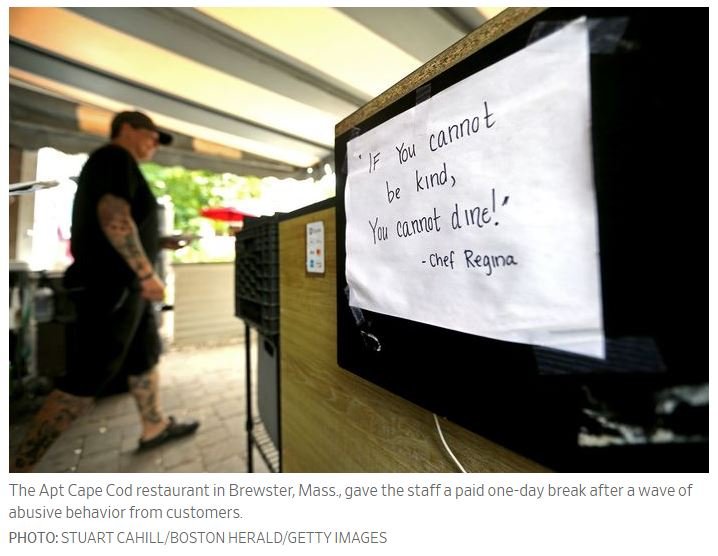
Consumer aggression and general crankiness is increasing. Customer satisfaction is at the lowest level since 2005. Product shortages, labor shortages and people's short fuses are all cited as part of the problem. A WSJ article this week explores exactly why so many people have become such jerks when dining, flying or shopping. Is the pandemic to blame?
In part, yes. The supply and labor issues make all of those experiences worse, but I kept thinking about the old cliche that you should never trust someone who is rude to a waiter. If experiencing a flight delay, or finding a product out of stock, or being asked to put on a mask in a store turns you into an angry tantrum-throwing asshole ... you should probably start by working on yourself, instead of blaming the pandemic.
Why Men Should Stop Leaving "Dad" Off Their Resumes & Profiles
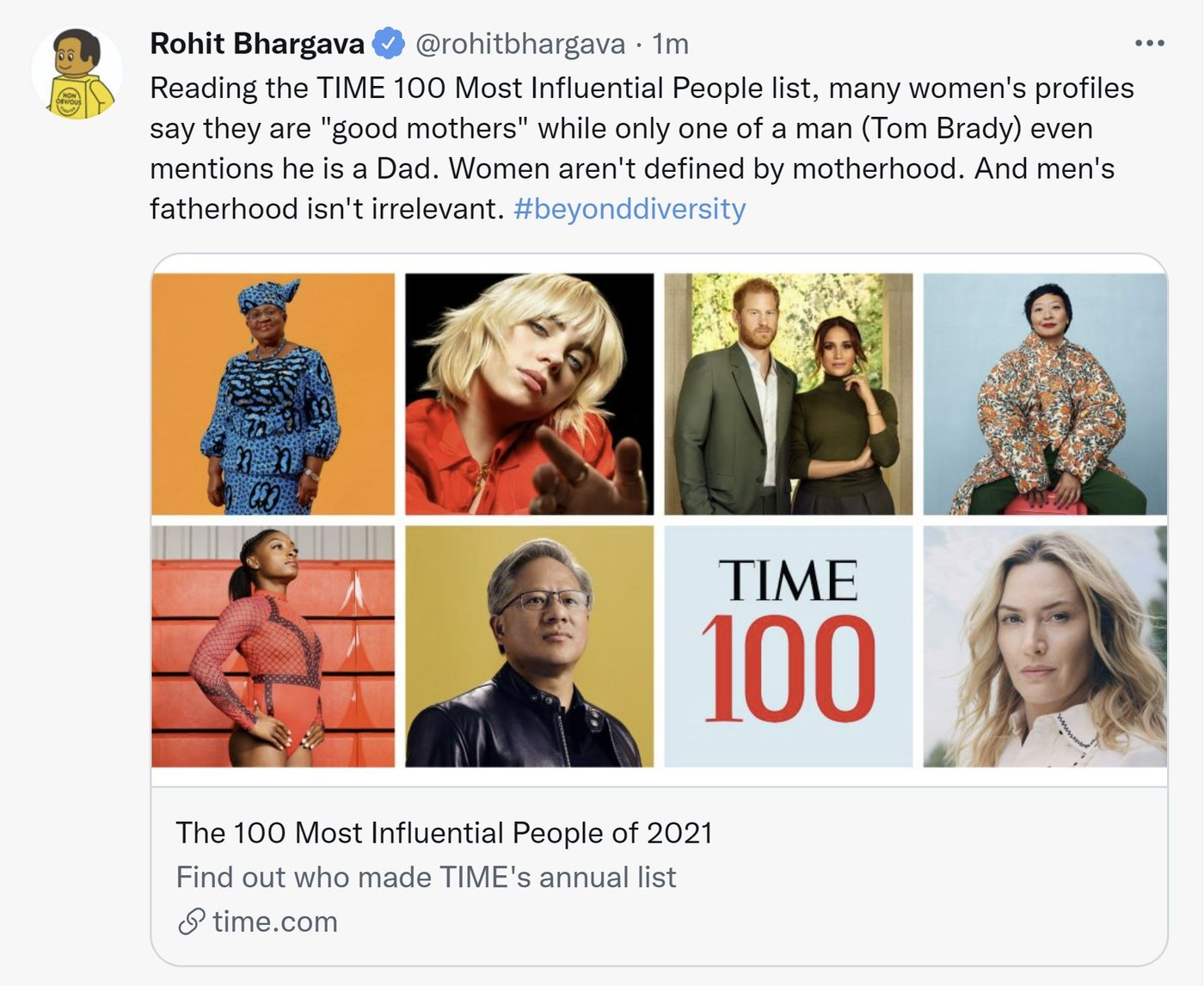
This week I shared a post on LinkedIn inspired by reading the TIME 100 Most Influential People list. It was hard not to notice women's profiles often spotlight their motherhood while almost none of the men profiled are even mentioned as fathers.
This may be our own fault. As men we don't tend to put our fatherhood front and center or share it proactively at work. But we should. Women are too often defined by their motherhood and face well documented discrimination because of it. That is a problem. Men's fatherhood can be buried and fuels the perception that it is irrelevant to who we are. That's a problem too.
Yesterday I updated my profile heading on LinkedIn to include the fact that I'm a Dad. Your bio should share the things you most want people to know about you. So yes, I'm an author and a publisher and a nice guy. And I'm a Dad of boys. I don't want that to get left out anymore.
How Genderless Design Is Taking Over Fashion
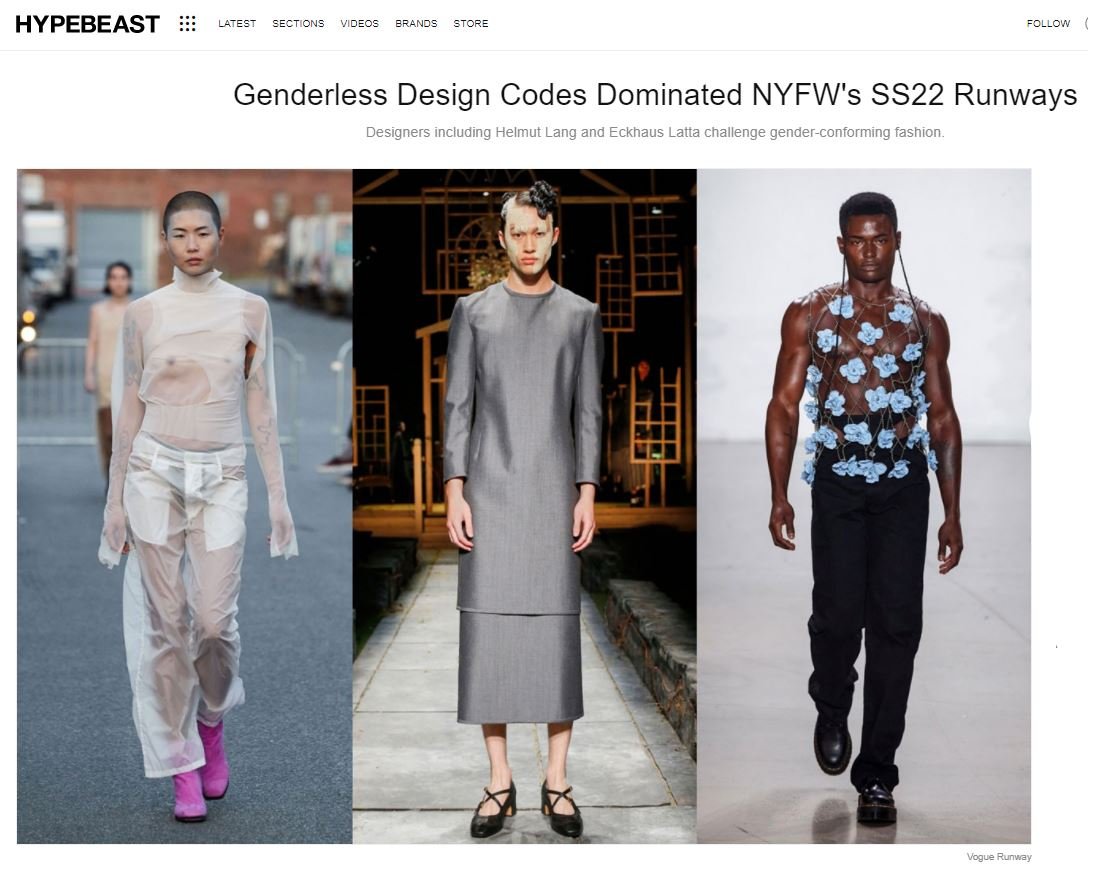
One theme emerged from New York's Fashion Week last week: "a future of fashion that appears largely absent of gender constructs." As one brand reminded the media, "fashion is simply meant to exist as a vehicle for self-expression." For more and more people, that self expression no longer includes the rigid rules around gender-based choices that it once did.
Fashion shows usually demonstrate the extremes of what people might wear ... and as a result they can feel out of touch for anyone who doesn't work in the fashion industry. Who would really wear these crazy shirts with 10 foot wings or a see-through tank top? Yet the point of these designs isn't to demonstrate what we will all be wearing ... but rather the edge of what's possible. It's intentionally extreme.
As a result, the creations move our culture just a little bit away from what we know. If you identify as male, you probably won't start wearing mini-skirts and spandex tomorrow. But your comfort with wearing jewelry or a pink shirt or making another fashion choice that might have seemed feminine just a generation ago is because of the effect of these fashion pioneers.
One Man's Quest To Prove Humans Prefer a 48 Hour Sleep Cycle
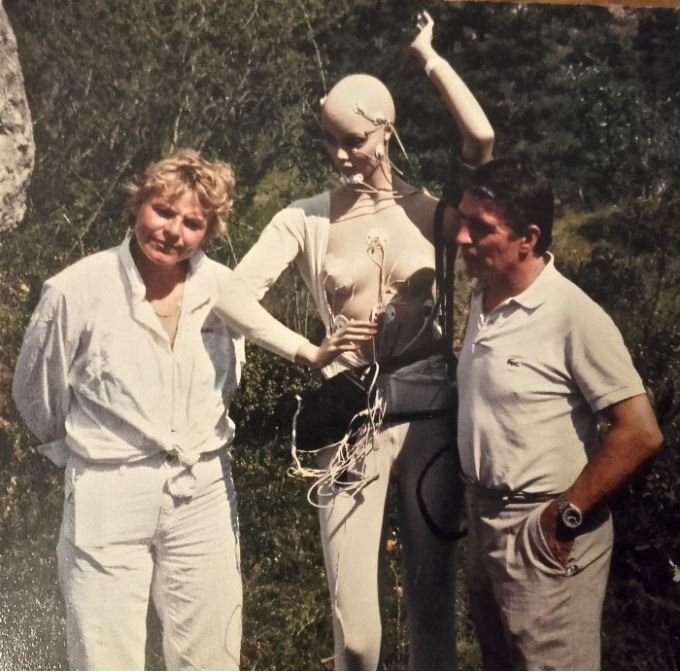
In 1962, a 23 year old geologist named Michel Siffre entered a dark cave with the intention of living there for two weeks completely cut off. He had no watch or light and could only make a call when he awoke to let his team monitor his sleep cycle. Siffre soon lost track of time and began to settle into a 48 hour cycle, staying awake for 36 hours and sleeping for 12. When he emerged, he thought he had been down there for less than half the time that had actually passed. After, he wondered whether there was such a thing as a natural body clock.
His life is the subject of an engrossing article from writer Alastair Williams and it's a movie-worthy story of an obsessed scientist and all-consuming journey to answer a fundamental question about our body clocks that nearly drove him to madness. Was he right? In the 90s, research showed that the 48 hour day was likely a product of his artificial lighting at the time and that humans seem to have "an inbuilt rhythm that, like the rest of the natural world, almost exactly matches the Earth’s rotation." Still, it's an interesting question and one that we only tried to answer because one man back in the 1960s decided to dedicate his life to asking it.
