Hypnotic Dining, Pet Cloning and the Hidden Shame of Unvaccinated Deaths
What’s In This Issue?
This Week’s Main Stories
 Story 01How Instagram Petfluencers Are Using Cloning To Bring Their Pets Back
 Story 02Why Is Canadian Architecture So Bad?
 Story 03Hypnotic Dining, Food Metaverse and Other Experiential Food Trends
 Story 04Is It Ever Possible to Avoid Buying More Stuff For Your Stuff?
Even More Stories
- The ‘Mona Lisa’ Is Going Immersive, Reshaping A 500-Year-Old Experience
- Nike Shifts Focus To Mental Health
- Fifth Graders as Futurists: Imagining the World in 20 Years
- After 149 Years, Colgate’s Toothpaste Tubes Are Finally Recyclable
- Ghosting on This Gen Z Dating App Will Literally Make You Invisible
- People Are Hiding That Unvaccinated Loved Ones Died of COVID
How Instagram Petfluencers Are Using Cloning To Bring Their Pets Back
Courtney Udvar-Hazy has run an Instagram account featuring her dog Willow for years. When Willow passed away, she turned to the company that (in)famously cloned Barbara Streisand's dog to create a clone of Willow. The procedure costs between $35,000 to $50,000 and is becoming more popular among "petfluencers" desperate to bring back a beloved pet that they also happen to have been making a living from online.
Losing a pet is a traumatic experience, but for those who have built a business around their pet ... choosing to bring them back has an emotional AND a financial ROI. Yet those who admit to cloning a pet also endure snarky comments about "zombie dogs" and criticism about how much they spent on the procedure. Will their example lead pet cloning to be more widespread?
The author of the article believes so, noting that "these furry duplicates are normalizing the world of animal cloning—and they could be ushering in an era of petfluencer immortality." So pet cloning could become common. That is a horrifyingly glorious concept.
Why Is Canadian Architecture So Bad?
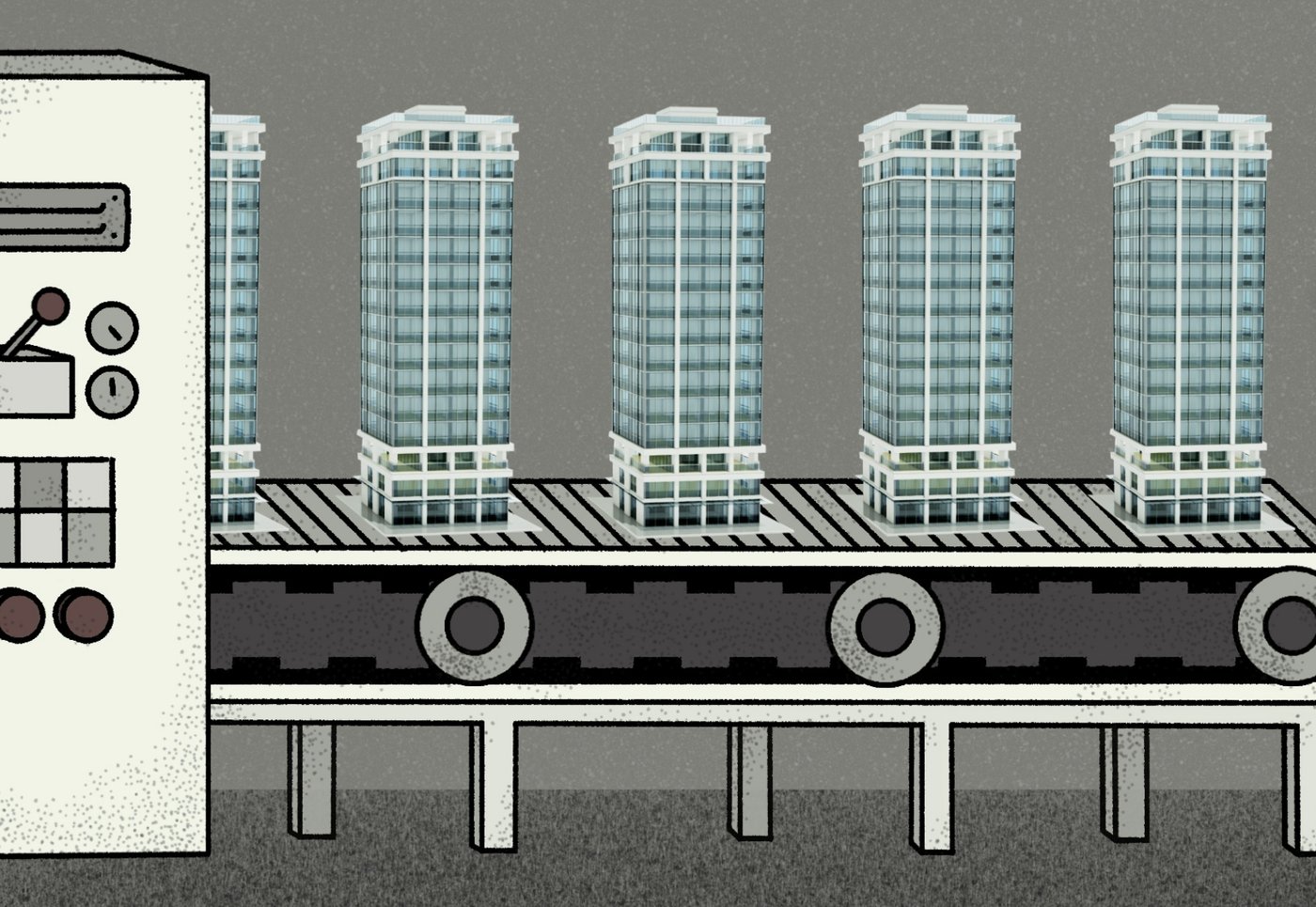
An article in The Walrus this week posed a provocative question about Canadian architecture: why is it so bad? After interviewing government officials and well known architects in Canada, the author writes that a big part of the challenge comes down to pressure on organizations and their leaders to demonstrate that they are spending responsibly ...
"In many instances, 'build cheap' also means 'build ugly'—not because good design necessarily costs more but because we have conned ourselves into believing that it does."
In too many design situations, decision makers are reluctant to chose the best or most creative solution because it may result in the perception that they overspent to get it. So instead we end up with uninspired design and ordinary buildings. It seems that only way to change this reality is if great architectural ideas can be sold alongside a compelling demonstration of how they can be executed in a value-driven way.
Hypnotic Dining, Food Metaverse and Other Experiential Food Trends
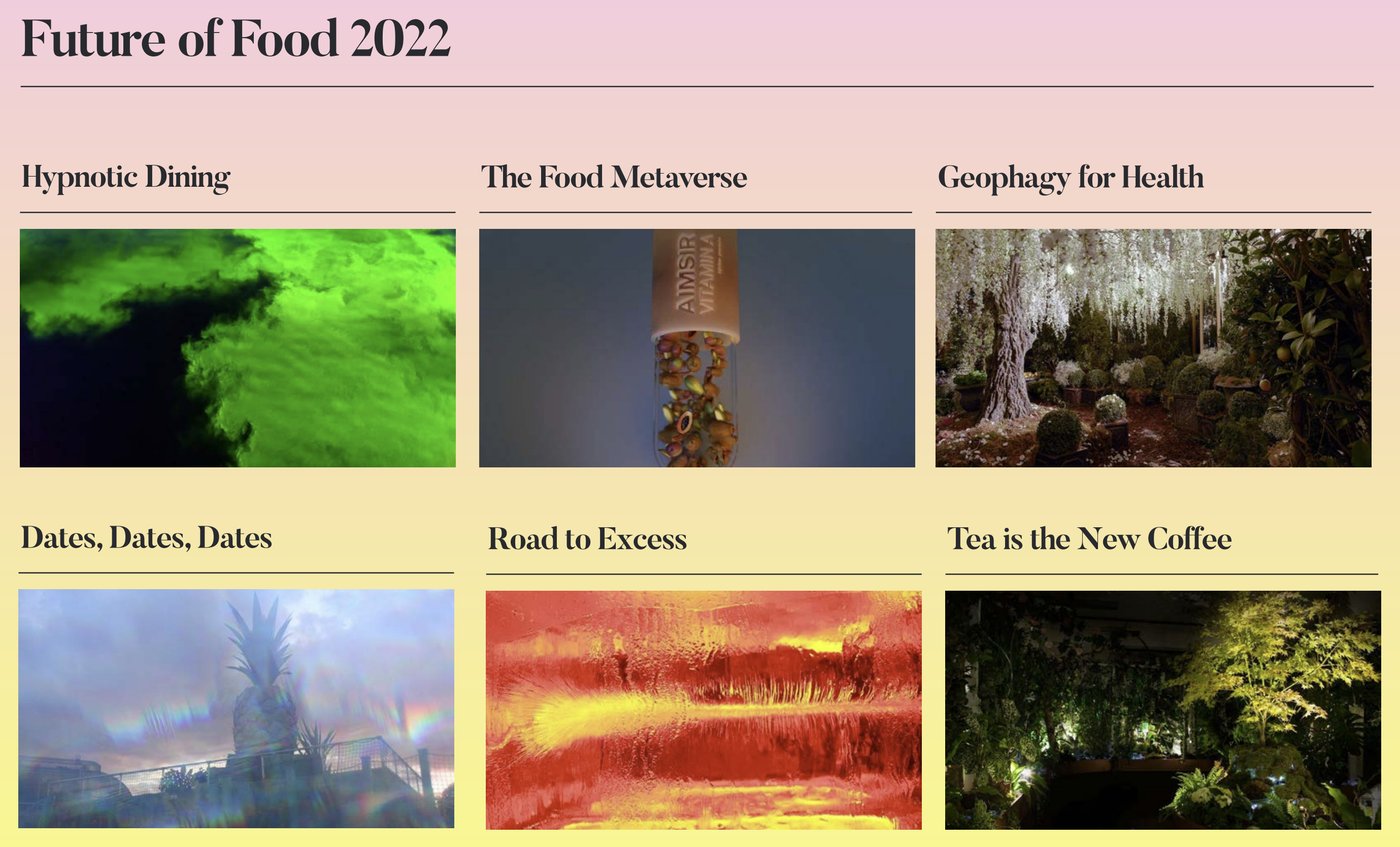
This week UK Experiential design studio Bompas & Parr released an insightful new report on the Imminent Future of Food and there were several ideas there worth reading. From the potential for hypnotic dining to alter your state of consciousness during a meal to experiments with virtual food experiences in the metaverse, the report is a "tasting menu" of sorts into food trends to watch in 2022.
Other interesting trends mentioned in the report include Geophagy for Health(the upside of eating mineral-boasting soils), the rise of Dates, Road to Excess (why people will take a hedonistic attitude towards food) and why tea is the new coffee. Download the full report PDF here >>
Is It Ever Possible to Avoid Buying More Stuff For Your Stuff?
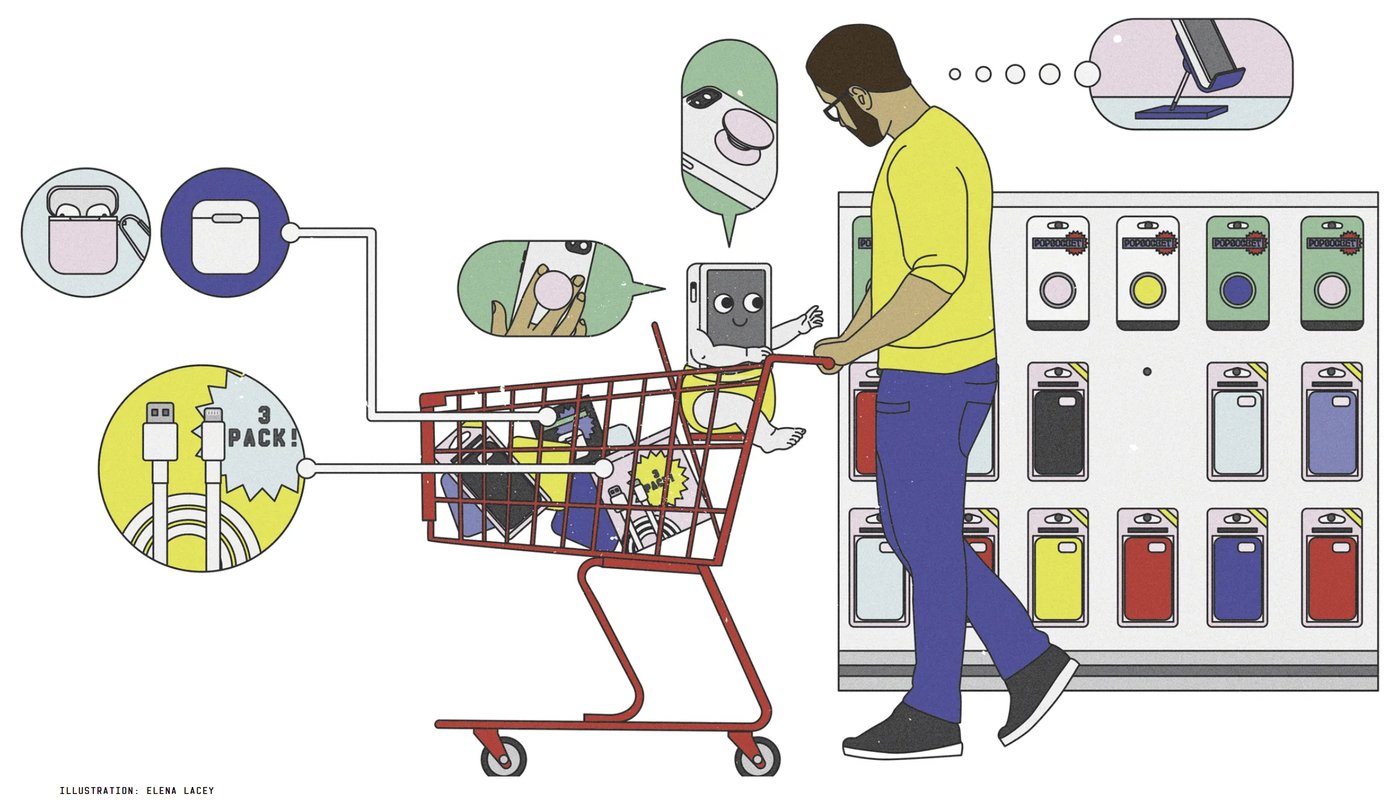
Are you buying stuff for your stuff? That was the question that inspired this article from WIRED contributor Paul Ford all about the challenges of buying with more intention. The first problem, he writes, is that "certain kinds of stuff simply attracts more stuff." Your cell phone needs a case and apps. Your home needs furniture.
The second issue that follows soon after is that "each thing, each unit of stuff, came with its own pet stuff—a stand, a foam cover, cords, a manual, a little drawstring case. The supply chain is fractal: Zoom in on your stuff and there's more stuff, ad infinitum."
Sadly, Ford's journey through this thought experiment ends in a rather unsatisfying way: with him content to try and understand the supply chain behind all this stuff. What if we actually could find new ways to rethink our endless consumption of stuff? One way to do it is to intentionally choose products that make a conscious effort to offer less. Refillable items are one example. Another is package free products. And let's not forget the most obvious solution: buy less stuff in the first place.
